Saturday, April 3, 2021

Holy Saturday

    Jesus is dead. All our hopes are overturned, the kingdom is not about to be liberated from the forces of oppression and injustice and evil after all. That's not what Jesus came to do, it turns out. This world, this life, is still going to be hard. I don't like to anticipate Easter too much, I like to sit with the devastated disciples in their upper room, grieving the gruesome lynching of their hero, the man on whom they had pinned all their hopes, reeling from the loss of everything they had looked forward to: King Jesus on the throne of a free, just, and holy Israel, blessed by the God who had sent Him to lead them out of darkness. Now Jesus is gone, gone all the way into that darkness. We, the disciples gathered in that upper room, we don't know yet about the resurrection. The holy women haven't yet gone to prepare the body for burial, and found it missing, and angels telling them He is risen. We haven't heard the good news yet, all we know today is that Jesus has been overthrown, betrayed by a beloved friend, scourged (whipped bloody), mocked, tortured, shamed (stripped naked), and hung up to die. It's all over, as far as the disciples know. Our hearts are broken.

Saturday, March 6, 2021

Challenge: Do Something Badly

    There are two quotes I've heard lately that have really struck me. Both have to do with pernicious perfectionism, and both I heard on ADHD-related podcasts. The first one was: 

B-minus work can change the world

    The corollary is: work that doesn't get done changes nothing. That one I heard on the I Have ADHD podcast, by host Kristen Carder, who was quoting life coach Brooke Castillo. What brings it home is how Kristen Carder shows up as a right hot mess, and let me tell you, with all her messiness she has taught me more than any other ADHD expert so far. If she had waited to get her act together before starting this podcast, I and a whole lot of other people would have lost out. 

    The second fits right in with that one: 

You don't have to be the best to do what you love

spoken by guest entrepreneur Kristen Ley on the Semi-Together podcast

Monday, March 1, 2021

Praying the Psalms

    My life is centered in prayer. A lot of that is personal, inward, direct, meditative or conversational. But the kind of prayer that forms the structure for my life, the kind that frames time, is called The Divine Office. This is the prayer that keeps me connected with a whole body of pray-ers, of people praying near and far; not only hermits, monks and nuns, but all Catholic and some Protestant priests and religious, past, present, and future, around the world and in many languages. It is a tradition that goes back to the Desert Fathers and Mothers, and beyond, back before Christianity, before the Second Temple, before the exile and restoration of Judea, even before Israel and Judea separated into two separate kingdoms, if tradition is right in attributing at least some of the psalms to King David. That would make them about 3,000 years old. 

    There are 150 psalms, and I chant them all, spread out over a two-week cycle, four sessions or "Hours" per day. Most priests and religious pray the "Roman Office," as I did while I was working full-time. It's the same thing, only the psalms are spread out over a 4-week cycle with 2 long and 5 shorter Hours per day. I guess I spend about two hours per day praying the Office, which is made up of biblical and non-biblical readings and other scriptural canticles, as well as the psalms. That's a lot of time I spend immersed in the psalms. And it's good, it is a source of stability and connectedness in my life that is very valuable.

    Then again ...

Saturday, January 30, 2021

Who is my enemy?

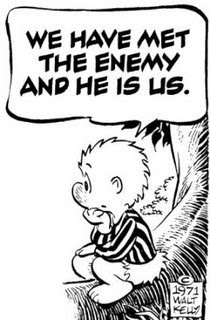
I've been wanting to say something about the appalling state of American politics. It seems to me that the most urgent issue in U.S. governance is not this party's policies or that party's policies, not what the last president did or what the new one is going to do. The most urgent issue facing us is our polarization, and I don't mean the dysfunctional Congress -- I mean the great gulf running between us, the voters. And I don't mean out there, I mean right here in my mirror, because I am as firmly pro-this side and as firmly disgusted by that side as anybody else. 

Friday, January 8, 2021

Silence, Solitude, Simplicity

I've changed my mind about blogging weekly. My vows as a hermit are Solitude, Silence, and Simplicity. Blogging is interfering with the Silence. I spend a lot of time thinking, which is great, but spending time trying to frame my thinking in words to get it across to other people is not so great. I'm thinking my thoughts twice, instead of just moving through them and on to the next experience. I'm getting bogged down, not living in the moment, which interferes with the openness that contemplation requires. I'm always evaluating myself, not just in relation to God and our relationship, but to try to express my truth to the outside world. It just doesn't work for me, for this contemplative life. 

I have always thought that introspective writing is much more useful when it is about lessons learned in the past. Experiences need to be gotten through, reflected on, and seen from the perspective of their longer-term effects. But I'm still in the first stage of the eremitic life. I'm still deep in the getting-to-know-me stage, and I don't think I have much more to say that is really fully baked and ready to publish. 

Evagrius Ponticus said, "the practice of stillness is full of joy and beauty: its yoke is easy and its burden light." So I'm recommitting to stillness, silence, mindfulness, meditation, contemplation -- which is the whole point of the monastic life, isn't it?

Thank you to my friends and family who have been following along. Feel free to e-mail me one-on-one. If you don't have my e-mail address, click on the menu (3 lines at top left) and you will find a contact form there. 

I wish you all choicest blessings in 2021. Peace to our polity, health to our families, and may we all grow daily to love ourselves and one another as God loves us all.

Wednesday, December 30, 2020

Holy leisure vs. unholy sloth

"Idleness is the enemy of the soul." Thus begins Chapter 48 of the Rule of St. Benedict, in which he lays out a schedule balancing manual and intellectual labor. Yes, we think with a private groan, we should keep busy. We should be productive! But wait -- that same schedule, that same paragraph in the Rule, also has time for a daily nap! St. Benedict's monastery was in Italy, after all. And then, there's my favorite commandment, the one about resting on the Sabbath. Idleness is the enemy of the soul, but rest is holy, and it is mentally, physically, and spiritually healthy.

Tuesday, December 22, 2020

Practical Asceticism: Get Bored

One of the quickest triggers for compulsive behavior, in my experience, is boredom. Learning to do absolutely nothing, even for a few seconds, is one of the hardest and yet most important lessons for me in the hermitage. It is also a very, very common challenge in our modern times, when we've all got a perfect little rectangle of constant distraction in the form of a smartphone. 

I'm 53 years old; I grew to adulthood without a PC, let alone a smartphone. We used to use phone books, big, thick, paper phone books. We used to buy maps at the gas station to figure out how to get where we wanted to go. If we got lost, we'd have to pull off the road to look at the map again, and if a road was closed for construction or the map was out of date, we'd have to find a pay phone to call for directions. If we had car trouble, we'd have to get out and hike to the next rest stop on foot to call AAA from a pay phone. We had a complete set of Encyclopedia Brittanica at home, a 3" thick unabridged dictionary, and library cards. We used to write our school papers longhand. It's incredible how remote those memories are. It's almost as if I read about that life in a book (an e-book, borrowed from the virtual library), instead of having actually lived it myself. 

I'm typing this on a Chromebook. I've closed the sudoku tab, the two Gmail tabs, the journaling app tab, and the tab for the article I was reading that was not relevant to this topic. My phone is on the table next to me. As almost always, it is on do-not-disturb mode. I have no notifications coming to my lock screen; I unsubscribe from almost every mailing list; I don't do Facebook or Twitter or Instagram at all. And still, I struggle with the temptation to lose hours playing solitaire or browsing endless web pages. There's nothing wrong with playing solitaire, and there is certainly nothing wrong with letting my curiosity roam freely around the fascinating resources on the internet. But I've lost something, and I think that it is something really crucial to the contemplative life: boredom. 

I think of boredom as what Thomas Merton called the point vierge, a pause that is empty in itself but poised with infinite potential. I think of it as "fallow mind," a pause in which the mind can rest, unmolested, and regenerate its creative fertility, the way a field does when it is left fallow for a season. It is a very uncomfortable state, itchy, littered with the burs and twigs of whatever came before, groping around semi-blindly for what might come next. It is really surprisingly hard to do nothing, even for a minute. It's surprisingly hard even to do just one thing at a time.

I want to share with you some books I've read that have made me think about disconnecting and quieting my mind. One is What the Robin Knows, in which the author pretty much blows me away by describing how he has learned so much about bird behavior: by just sitting still and watching them. So simple, but so hard to sustain! Another is How to Eat, by Thich Nhat Hanh, about how to pay attention to what you are doing, and only what you are doing, for as long as you are doing it, and how valuable that is. Nir Eyal's Indistractible and Manoush Zomorodi's Bored and Brilliant are both specifically about asserting a right relationship to the gifts of technology. Check out this TED talk by Zomorodi.

My phone and my Chromebook are tools. They are amazingly useful. I use them to keep me on track with my horarium, ringing bells at the different hours of the day to call me to prayer time, meal time, chore time, bedtime. I have much of my library on Kindle. The phone is a tool for citizen science, for learning about and contributing to knowledge of the natural world around me. I've got weather forecasts and tide tables. My calendar is there, to-do lists, grocery shopping lists. Medical records and communication, banking, shopping, recipes -- on and on and on. But it takes mindfulness to keep the tool from becoming the master. 

And (this is supposed to be practical asceticism, right?) OK, here are some things I do that help to keep my phone under control:

  • I have multiple e-mail addresses, and they have separate notification settings. I don't get pop-ups for newsletters, shipping confirmations, etc. 
  • Unsubscribe! Even if I have signed up for a news feed of some kind, I usually end up unsubscribing from it. If I don't want to, I have it sent to a separate inbox, so I can sit down and browse through it at a time of my choosing.
  • Use the Do Not Disturb setting on my phone. I can customize that setting to let through calls and notifications of my choosing. Ditto notifications on the lock screen.
  • Remove icons from the home screen. If there are shortcuts I want there, I group them into folders to reduce visual clutter. 
  • I don't use Facebook, Twitter, Instagram, or anything like that. If you don't want to give them up completely, I'm pretty sure you can customize your settings so that they don't bombard you with information you aren't looking for. Either way, maybe schedule a specific time or times in your day for looking at them. The point is to choose how you want to use them, not just to react to constant clickbait.
  • Ditto YouTube, which I do look at sometimes -- just turning off Autoplay is all it takes. 
  • There are games I've had to just uninstall. Sometimes more than once. I know I'm not the only one! 
There are no doubt other settings and apps designed to help us turn our devices from soul-sucking monsters back into useful tools. If you have any to suggest, please comment! I am definitely not as free as I want to be. I'm a beginner at learning to let my mind float free, but I've come just far enough to be convinced that it's very much worth trying to do.

Peace and joy to you all